Our principles
Principle 5: Showcase and support action for nature across our farmed landscapes.
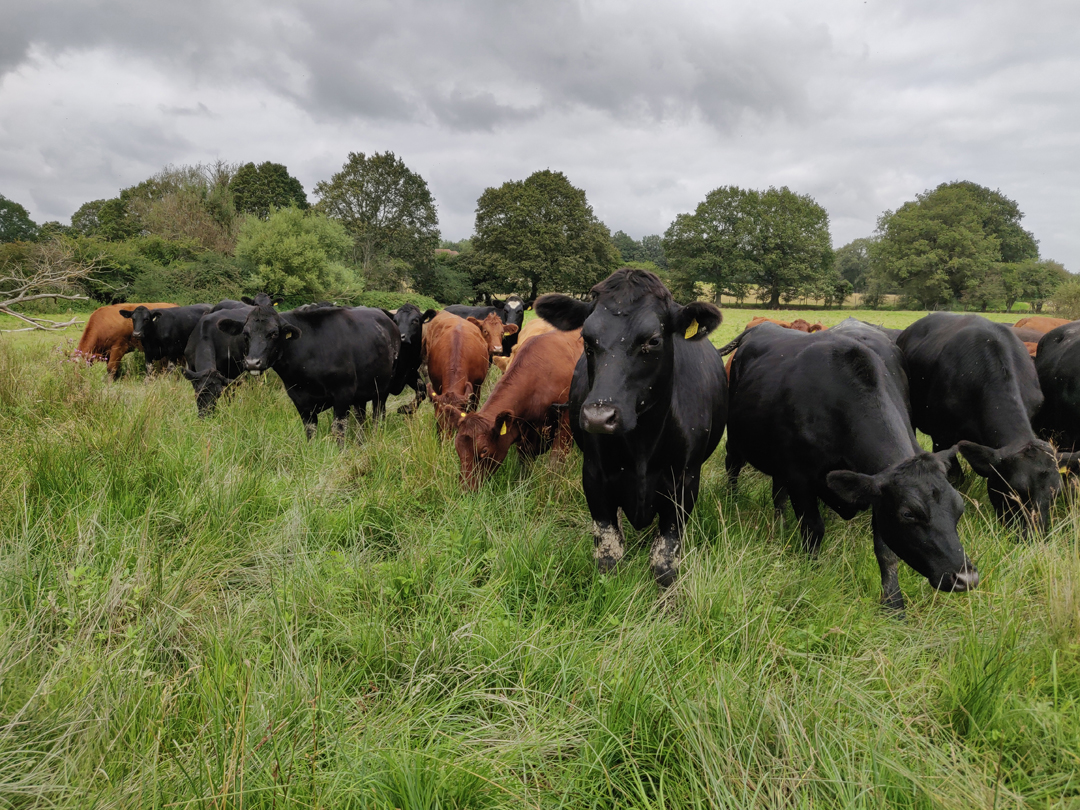
Mob grazing © High Weald National Landscape Partnership
About two thirds of the landscape of West Sussex, East Sussex and Brighton & Hove is farmed. Farming and woodland management has been shaping our countryside for centuries, creating and maintaining many of our most valued habitats such as species-rich grassland and ancient woodland.
Agriculture's pressure on nature and the wider environment
However, agriculutral policies after World War II led to significant land-use changes, when hedgerows and lower-input grasslands were removed to make way for greater food production. This led to a dramatic loss of habitats and species from the UK’s farmed landscape. Today, practices such as widespread use of pesticides continues to put pressure on species and pollinators, while the addition of nutrients to the land works alongside climate change to result in significant negative impacts to our rivers, streams and aquifer from diffuse agricultural pollution.
A more sustainable future
At the same time, many farms and estates across West Sussex, East Sussex and Brighton & Hove invest in nature on their land and have done for generations. They see this as an integral part of their purpose and business despite ongoing changes to government agri-environment policy and lack of certainty about what this will look like in the future.
Farmer clusters and landscape recovery initiatives bring landowners and managers together to collaborate for nature across their combined larger areas and funding schemes such as ‘Farming in Protected Landscapes’ have been popular with farmers in the South Downs and High Weald. Projects to support our ‘farmland specialist’ species, such as turtle dove and grey partridge, are assisting farmers to provide the specific habitats these species require. The use of regenerative farming practices that improve soil and water as well as the nutrient density of food are also becoming more commonplace.
|
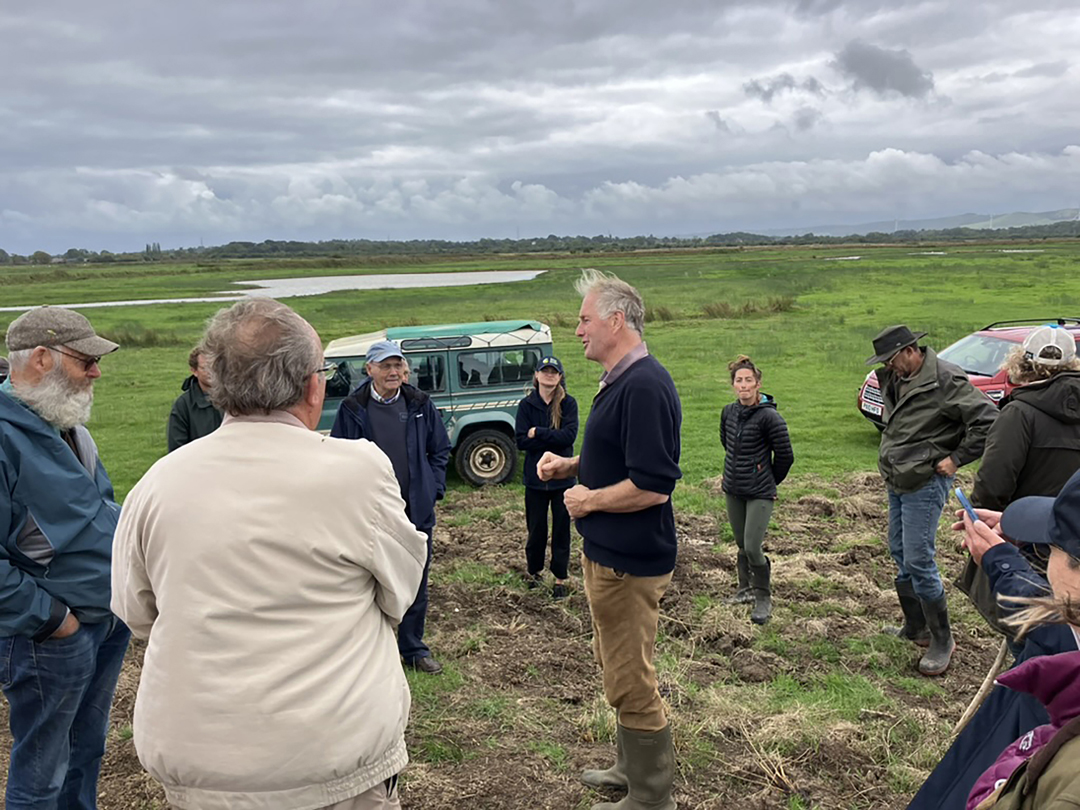
Martin Hole, member of Pevensey Farmers, shares actions for nature taken by the cluster in the internationally important wetlands of the Pevensey Levels © Diana Alcroft |
However, many other landowners and managers (especially those running small, family farms) are working at capacity to merely stay in business.
Many famers want to be more proactive in supporting wildlife, but do not have the time or expertise to engage with complex land management schemes. Additionally, an increasingly unpredictable climate which gave us very wet conditions in 2023 and 2024 and drought in 2022 and 2025, further challenge the stability of farm incomes.
What we need to do
Achieving more nature across our farmed landscape and a reduction in its impacts on the wider environment will require support for farmers and landowners, primarily through funding, advice and agricultural policy. Much of this lies outside the scope of an LNRS but much more can be done locally to provide information on the actions that can be implemented by farmers and landowners and how these can play a key role in supporting the nature we have in West Sussex, East Sussex and Brighton & Hove.
More can also be done to showcase the many positive actions taken by farmers and landowners across our LNRS area and widen engagement to others who may need additional encouragement and support to get involved.
The LNRS aims to help this by:
- Identifying the priorities for nature’s recovery in West Sussex, East Sussex and Brighton & Hove that can be delivered across our farmed landscapes and how these can be achieved in practice. (See the Farmland & Soils storymap.)
- Reflecting existing and future ambitions for nature held by estates, farms, farmer clusters and other farmer-led initiatives, thus supporting them in their bids for funding and support.
- Identifying where nature-based solutions (which may attract specific funding for farmers and landowners) could best be located to help address wider environmental issues. (See Principle 7).